Our Services
SEWAGE TREATMENT PLANTS (STP)
We Design, Fabricate, Supply, Erection and Commissioning Sewage Treatment Plants (STP) for treating sewage generated by Industry, large colonies, Hotels, Hospitals, IT Parks and commercial buildings.
Now a days the Sewage Treatment Plant (STP) became statutory requirement of all the State Pollution Control Boards, everybody, whether Hotelier or Industrialist were looking for economical, easy to install and operate compact type Sewage Treatment Plant. Since the land is extremely expensive, very few industries could afford the large treatment units as recommended by most of the Consultants.
Sewage Treatment Plant Process
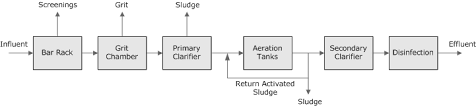
Sewage treatment plant process incorporates sewage treatment on Primary, Secondary or biological and tertiary treatment procedure to improve the quality of wastewater for reuse.
In the primary process, the sewage is temporarily held in a quiescent basin where the heavy solids can settle to the bottom, while oil, grease and other solids float to the surface. These are removed and the remaining liquid is subjected to the secondary treatment, wherein the suspended and dissolved biological impurities are removed. In tertiary treatment, the treated water is disinfected chemically or physically, before discharging into streams or rivers.
Technologies Used
- ASP : Activated Sludge Process
- MBBR : Moving Bed Bio reactor
- SAFF : Submerged aerated Fixed Film
- SBR : Sequential Bioreactor
- MBR : Membrane Bio Reactor
Treatment Process Flow Diagram
Swami Engineering Services Offering Following STP
STP - Package Type
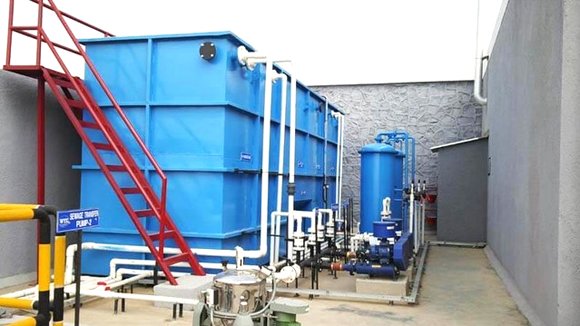
Capacity : 5 KLD – 500 KLD
Technology : MBBR / SAFF / SBR / MBR
Features :
Semi-automatic Operation.
Easy to transport & Installation
Erection and commissioning by Trained and experienced Swami Engineering Services Team
MOC of Tank = MS-FRP (Coated) /MSEP.
Completely above ground Installation.
Only Sewage collection tank in Civil (RCC)
Typical Industries : Medium Scale Industries, Housing Complex, Labour Camps, etc.
STP - Civil Type
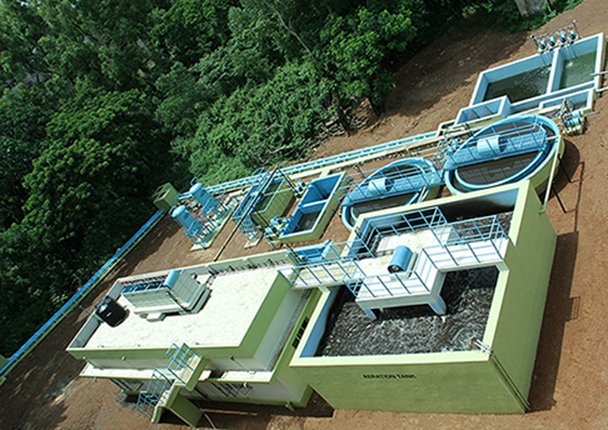
Capacity : 10 KLD – 50 MLD
Technology : MBBR / SAFF / SBR / MBR / ASP
Features :
Semi-automatic Operation
Minimum Maintenance Required
Underground & Above The Ground Civil Work ( RCC ) Construction
Erection and commissioning by Trained and experienced Swami Engineering Services Team
Treated Water can use for Irrigation, Gardening, Flushing Purpose
Typical Industries : Large Societies, Hospitals, Hotels, Large Industries, Commercial Complex.
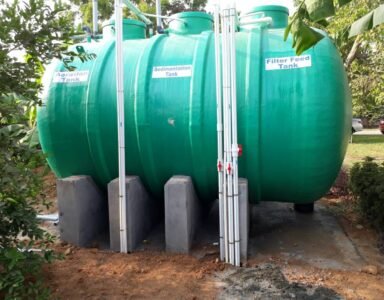
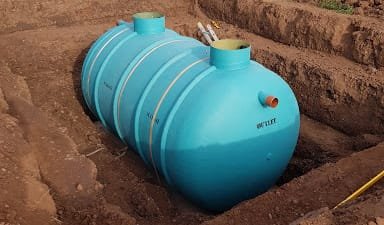
STP – FRP Made Packaged Type
Above Ground Level
Under Ground Installation
Capacity : 10 KLD – 200 KLD
Technology : MBBR
Features :
Semi-automatic Operation
Minimum Maintenance Required
Underground & Above the Ground Installation.
Erection and commissioning by Trained and experienced Swami Engineering Services Team
Treated Water can use for Irrigation, Gardening, Flushing Purpose
Typical Industries : Large Societies, Hospitals, Hotels, Large Industries, Commercial Complex.
STP – Soil Bio Technology
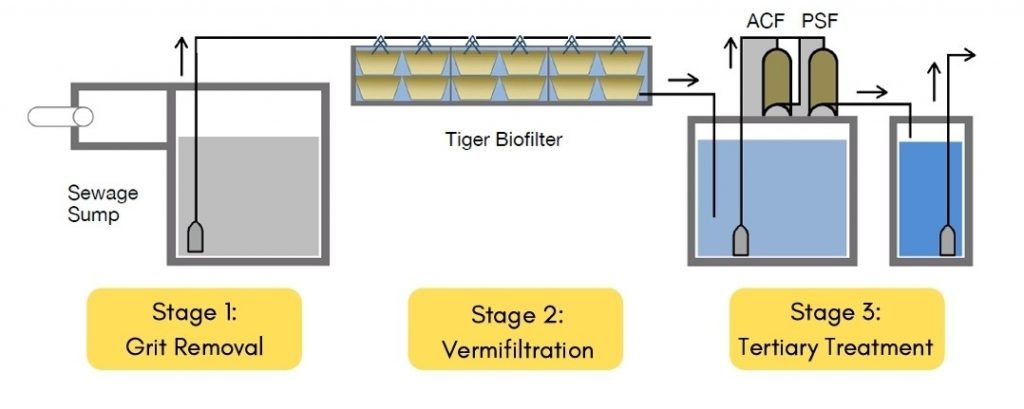
Vermifilter have previously been reported to be a superior form of sanitation to both septic tanks and pit latrines. Earthworms are well known to promote digestion of organic waste, which results in the production of vermicompost. In vermifilter, this behavior is combined with filtration to digest organic matter present in sewage. The worms need only air, water and food to form a sustainable population in the vermifilter.
Advantages:
- 100% Natural, Economic and Ecofriendly
- High Energy saving due to less electricity requirement
- Easy operations as unskilled labor can operate
- Area requirement is minimum as compared to other technologies
- No recirculation of sewage. Single run treatment.
- No need of separate sludge handling, management and
- Fully aerobic system, No odor, mosquito and fly
- Nutrient rich compost obtained periodically for farming/gardening.
- Treated water meets CPCB discharge standards
Operation:
Unskilled labour with basic onsite training will efficiently operate the plant. The plant can be fitted with semi-automatic mode for minimizing the manpower required.
Residual sludge is not generated as compared to other technologies so sludge disposal facility is not required in TBF System. The organic waste is converted by the earthworms into vermicompost that can be collected in every three months and will be used as byproduct for gardening purpose. Therefore operation and maintenance of STP using TBF technology is quiet easy.
STP – Electro Coagulation / Electrolysis System Type
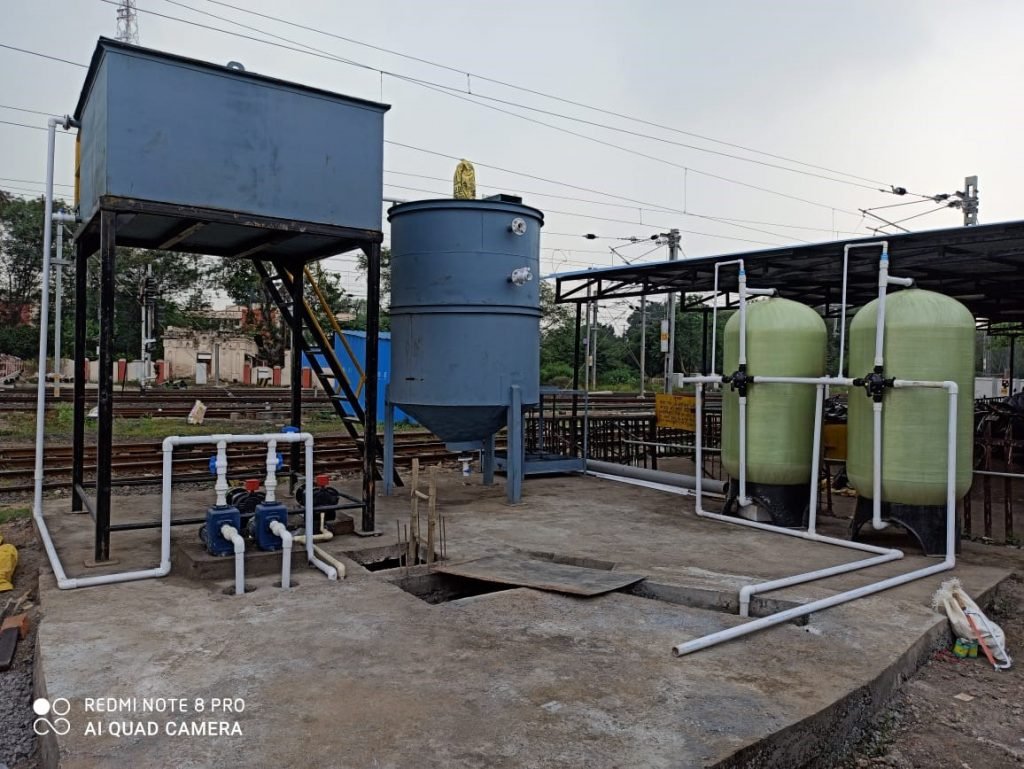
Electrocoagulation consists of pairs of metal sheets called electrodes, that are arranged in pairs of two—anodes and cathodes. Using the principles of electrochemistry, the cathode is oxidized (loses electrons), while the water is reduced (gains electrons), thereby making the wastewater better treated.
Advantages:
It can lead to better quality effluent
Electrocoagulation treats water without the need for chemicals. This means there is no danger of residual chemicals making their way into the effluent, leaving behind toxins and odors. There is also no thickener required as there would be in chemical coagulation, which reduces the cost of the operation up front.
Metals can be recovered from the solution
The metals that are found suspended in untreated water may not be useless. In fact, they may be very useful indeed; it is just that they pose a hazard when they are suspended in water. As the process uses a form of electrolysis to separate and coagulate liquids, it can collect metals in a purer form. These metals can then be used in various applications.
It only requires a low level of electrical current
It actually does not take much current, in most cases, to run the coagulation equipment. This low level of current can easily be produced using green energy sources.
EFFLUENT TREATMENT PLANTS (ETP)
We design, manufacture, supply and commission equipment’s for effluent treatment plants, conventional ETP Plant. We are doing Design supply installation for various types of industries like Paper and Pulp Industry, Beverage Industry, Textile Industry, Chemical industry, pharmaceutical industry, Food Industry, Hotels, Automobile industry & others.
Benefits Of ETP
- To clean industry effluent and recycle it for further use
- To reduce the usage of fresh water in industries
- To preserve natural environment against pollution
- To meet the standards for emission of pollutants set by the Government & avoid heavy penalty
- To reduce expenditure on water acquisition
- Less Footprints
Swami Engineering Services Offering Following ETP
Continuous Mode ETP
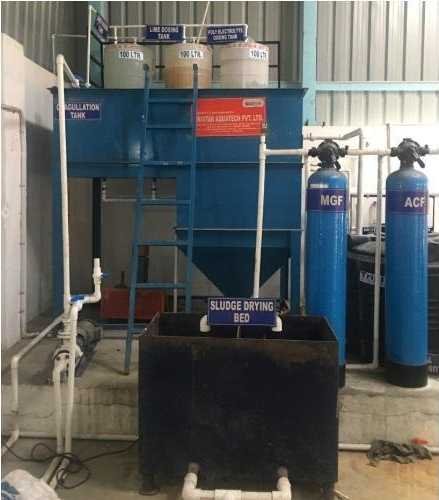
Capacity : 1.0 to 1000 KLD
Technology : Physical / Chemical / Filtration
Features :
Semi-automatic Operation.
MS process tanks with internal FRP Coating
Advanced Filtration systems like UF, RO for Zero liquid discharge.
Compact design, required low foot print
Corrosion free UPVC piping & FRP / Epoxy Lined MS tanks.
Process Tanks – MS Fabricated / Civil (RCC)
Common Effluent Treatment Plant (CETP)
The chemically treated effluent will lead to biological treatment for the removal of organic matter and to control the TDS values.
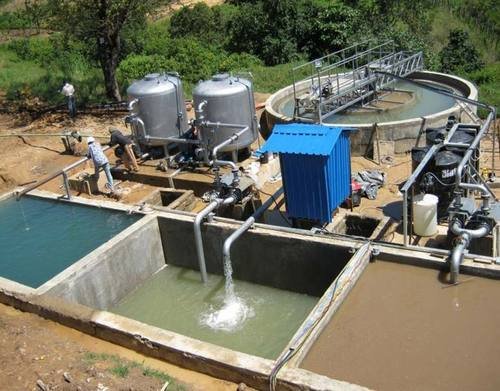
Capacity : 20 to 25 MLD As Per Client requirement
Technology : Physical / Chemical / Biological / Filtration
Features :
Semi-automatic Operation.
MS process tanks with internal FRP Coating
Advanced Filtration systems like UF, RO for Zero liquid discharge.
Compact design, required low foot print
Corrosion free UPVC piping & FRP / Epoxy Lined MS tanks.
Process Tanks – MS Fabricated / Civil (RCC)
ZERO LIQUID DISCHARGE (ZLD)
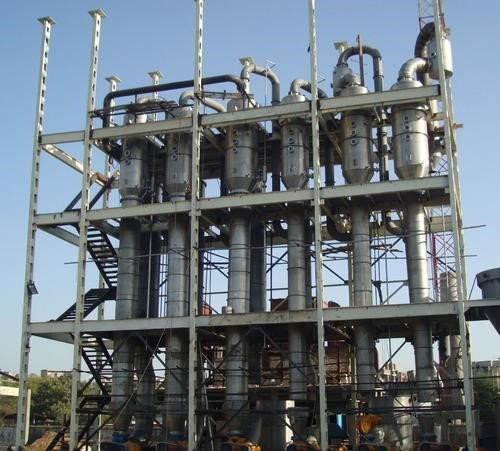
Zero-liquid discharge (ZLD) is a water treatment process in which all wastewater is purified and recycled; therefore, leaving zero discharge at the end of the treatment cycle.
Zero Liquid Discharge (ZLD) is a treatment process designed to remove all the liquid waste from a system. The focus of ZLD is to reduce wastewater economically and produce clean water that is suitable for reuse (e.g. irrigation), thereby saving money and being beneficial to the environment. ZLD systems employ advanced wastewater/desalination treatment technologies to purify and recycle virtually all of the wastewater produced.
The conventional way to reach ZLD is with thermal technologies such asevaporators (multi stage flash (MSF), multi effect distillation (MED) and mechanical vapor compression (MCV)) and crystallizers and recover their condensate. Thus, ZLD plants produce solid waste.
Salient Features:
- High Efficiency, Less Maintenance
- Quick To Install
- Compact Design
- Highest Steam Economy
WATER TREATMENT PLANTS (WTP)
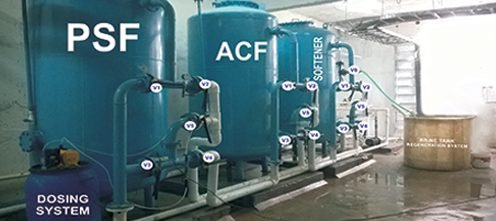
We Design, Supply, Erection & Commissioning of different type of industrial & Domestic Water treatment plants as per requirements, comprises of Water Softeners, DM Plants, UV, RO, UF, Stand Filter, Carbon Filter, Dual Media Filters, Bag Filters etc.
ULTRAFILTRATION PLANT (UF)
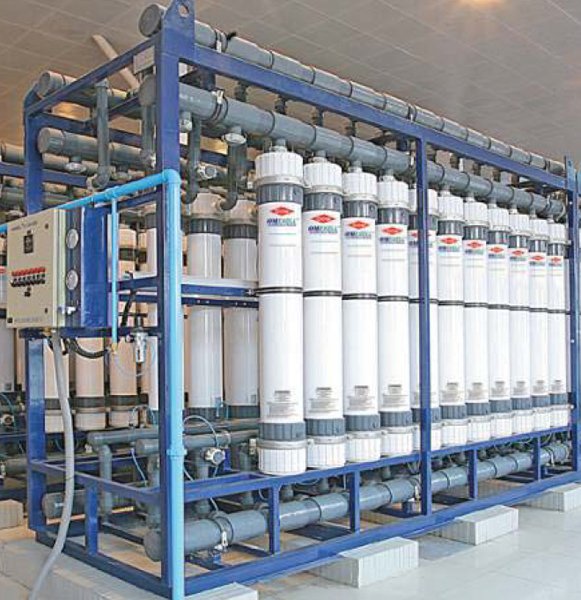
Ultra Filtration (UF) is a type of membrane filtration. Industries such as chemical and pharmaceutical manufacturing, food and beverage processing, and waste water treatment, employ Ultra Filtration in order to recycle flow or add value to later products. Ultra Filtration is commonly abbreviated to “UF.” UF’s main attraction is its ability to purify, separate, and concentrate target macromolecules in continuous systems.